Work / Fleet Operations Platform
Fleet operations, watched over in real time.
A multi-tenant fleet operations platform built with Python, React, PostgreSQL, and Redis. It unifies dispatch validation, vehicle health tracking, route exception alerts, and billing in one operational dashboard.
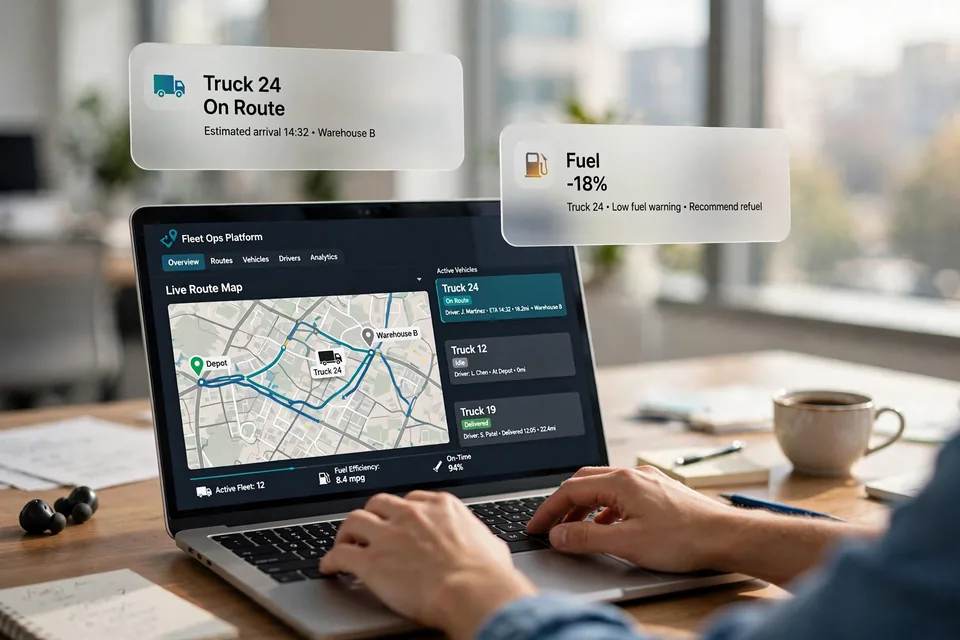
Spreadsheets cannot keep pace with morning fleet dispatches.
Commercial fleet dispatchers manage tight operational windows every morning. When driver assignments, vehicle maintenance logs, and fuel receipts live in disconnected spreadsheets and paper folders, small mistakes snowball quickly.
Unchecked vehicles leave depot without valid inspection certificates, leading to expensive highway breakdowns and roadside penalties. Meanwhile, trip records are compiled days later by hand, creating invoicing disputes and delaying billing reconciliation by weeks.
Five core capabilities delivered in plain operational language.
- Pre-dispatch safety guards: Automated checkpoint gates that verify vehicle fitness, driver licenses, and route permits before allowing any vehicle to leave the yard.
- Vehicle health scoring: Dynamic health scores calculated per vehicle from maintenance histories, mileage, and reported mechanical wear to catch breakdowns early.
- Real-time exception engine: Proactive operational alerts that flag unassigned trips, route deviations, and overdue deliveries immediately to dispatch managers.
- Streamlined billing workflow: Dispatch-linked trip logging that calculates accurate billing hours and fuel records without manual data re-entry.
- Operational AI assistant: A context-aware copilot that lets dispatchers query driver availability, vehicle history, and operational rules in plain language.
From morning depot gate check to trip settlement.
Every dispatch run moves through sequential operational stages:
Gate Check
Vehicle fitness, license expiry, and route authorization validated at dispatch.
Route Run
Active trip status monitoring with exception alerts for delayed or unassigned legs.
Yard Return
Driver check-in, odometer logging, and post-trip mechanical defect reporting.
Reconciliation
Trip hours, fuel entries, and customer delivery invoices auto-reconciled.
Multi-tenant isolation and strict role boundaries.
Because multiple transport entities run on the platform, tenant isolation is enforced at the database query level with strict tenant identifiers on every read and write operation.
Role-based access controls (RBAC) ensure drivers, mechanics, dispatchers, and accounting leads only access the exact data required for their daily duties. The backend API is protected by defensive rate limiting, input schema validation, and secure session management.
Key architectural trade-offs made during development.
Database Isolation vs Shared Complexity
We chose tenant identifier scoping with strict PostgreSQL schema-level constraints over running isolated database instances per tenant. This provides immediate query boundary safety while keeping maintenance and backup routines unified.
Keyboard-First Dispatch UI
During morning dispatch rush hours, operators do not have time to explore deep navigation trees. Designing keyboard-accessible run verification and high-contrast status badges reduced dispatch processing friction far more than complex analytics widgets.
What it does today
The platform runs live in production. It supports daily dispatch creation, checkpoint validation, real-time exception monitoring, driver license tracking, and automated billing exports.
We operate and maintain this product continuously as part of FusionTechMark's live product portfolio.
Need custom operational software like this?
Running logistics dispatch, healthcare operations, or complex scheduling? We build systems shaped strictly around how your team works.
Request a Free Workflow Audit →